
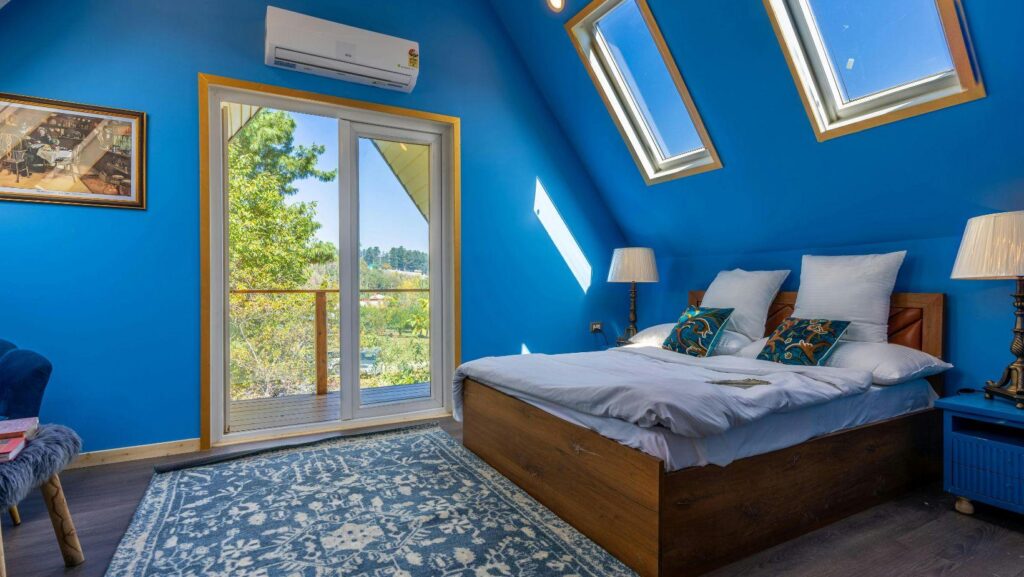
The thermostat downstairs reads 76 and the living room feels fine. Then you go up to put a kid to bed and the hallway hits you like an open oven door. The vents are blowing. You have already closed the blinds, added a fan, and dropped the thermostat two more degrees, and at 10pm that room is still the warmest place in the house. Most people blame the windows, or an air conditioner that is too small. In a lot of homes the real answer is sitting a few feet above the ceiling, and it has been collecting heat since around 2pm.
The Heat Is Not Coming From the Windows
Windows matter, but they are not the biggest surface your house points at the sun. The roof is. It takes direct sunlight for most of the day, it has no shade, and it is usually the largest single plane on the building. The Department of Energy puts a conventional roof at 150 degrees or more on a sunny summer afternoon. That heat does not stop at the shingles. It moves into the roof deck, then into the air in the attic, then down through the ceiling into the room where someone is trying to sleep.
Homeowners who call a roofing contractor in the Coachella Valley about one stubbornly hot bedroom are often surprised that the conversation starts above the ceiling rather than at the window. The room is hot because it shares a boundary with the hottest part of the house, and no amount of cold air pushed into it from below changes that boundary.
What Happens Above the Ceiling On a Hot Afternoon
An attic is not just hot. It is hot on a delay. Monitoring by the Florida Solar Energy Center found attic air running roughly 10 to 40 degrees above the outdoor temperature, depending on the roof material and how well the space was vented. Dark shingle roofs with poor venting sat at the top of that range. Tile roofs, which have an air gap underneath them, sat near the bottom.
Now put that on a desert schedule. Palm Springs averages a July high near 109 degrees and clears 100 degrees on about 115 days a year, according to NOAA climate normals. The attic above your ceiling spends that afternoon well past 130.
Then the sun goes down, and the second half of the problem shows up. NOAA puts the average July overnight low at about 79 degrees. There is not enough cool night air to pull the stored heat back out, so the attic keeps radiating down into the bedrooms for hours after dark. That is why the room is still warm at 10pm even though the sun sets at 7:30.
Sleep researchers generally put the comfortable range for sleeping around 65 to 68 degrees, though work on older adults points to a warmer band closer to 70 to 74. Either way, a bedroom sitting at 80 is outside it.
The Roof Surface Sets the Limit for Everything Below It
Of everything you can change, the reflectance of the roof surface moves the number the most. A reflective roof stays more than 50 degrees cooler than a conventional one in the same sun. That is not a marginal difference. It changes how much heat ever enters the assembly, which is a better place to solve the problem than trying to remove it afterward with more air conditioning.
The EPA reviewed measured buildings and found reflective roofs cutting cooling energy use by about 20 percent on average, with a range from 2% to more than 40% depending on insulation and ductwork.
One study of apartments in Sacramento speaks directly to the hot bedroom. After a reflective roof went on, peak attic temperatures dropped 30 to 40 degrees, second-story air dropped about 4 degrees, and first-floor air dropped about 2 degrees. Upstairs benefited twice as much as downstairs, which is exactly what you would expect if the ceiling is the source.
Roof type matters too. Concrete and clay tile perform better than they look on paper, because the tiles sit on battens with an air gap under them. A California field study by the Lawrence Berkeley and Oak Ridge national laboratories estimated that a ventilated gap is worth roughly 28 points of solar reflectance compared with shingles lying flat on the deck.
Insulation and Airflow Do Two Different Jobs
People use these interchangeably and they are not the same tool. Insulation slows heat moving through the ceiling. Ventilation carries hot air out of the attic. You need both, and neither one substitutes for the other.
On insulation, ENERGY STAR’s guidance for warm southern climates is R-49 in an attic that has little or none now. Plenty of homes built before the 2000s sit at half that, with the original batts compressed, gapped, or shoved aside by whoever last ran a cable up there. Insulation is also the cheapest meaningful fix on this list by a wide margin.
A radiant barrier is the other piece, and it is often missing. It is a reflective foil facing the attic air space that blocks heat radiating down off the roof deck, rather than slowing conduction the way insulation does. The Department of Energy estimates a radiant barrier cuts cooling costs by 5% to 10% in a warm, sunny climate.
Field measurements show an attic vented at both the soffit and the ridge running about 14 degrees cooler than one vented at the soffit alone, which is worth having. However, adding vents past code minimum stops paying off quickly, and no venting arrangement gets you what a reflective surface gets you. Treat airflow as necessary, not as the fix.
The Cheapest Fixes Come First
Here is the part that rarely makes it into an article written by someone who sells roofs. The roof is the most expensive item here, and it should usually be the last one you touch.
If your roof still has years left in it, start inside. Bring the attic insulation up to current levels. Confirm the soffit vents are open and not painted shut or packed with blown-in insulation, which is common. Seal the attic hatch and any recessed light cans leaking conditioned air upward. Check whether your air handler and ducts run through the attic, because ducts sitting in 130-degree air give up a real share of the cold they are carrying before it reaches the register. A radiant barrier can be added to an existing attic without touching the roof at all.
The moment to think about the roof surface is when the roof is due anyway. Replacing a sound roof to gain reflectance rarely pays for itself. Replacing a roof that is failing, and choosing a reflective product instead of the darkest one on the shelf, costs little extra and changes the attic permanently. In California, part of that is decided for you. The state energy code sets minimum roof reflectance for re-roofing in the hot inland and desert zones, and the 2025 version applies to permits pulled on or after January 1, 2026.
Giving the House a Chance to Cool Down At Night
The hot upstairs bedroom is not a mystery, and it is usually not an air conditioning problem. It is a heat storage problem. A dark roof loads the attic all afternoon, and in a climate where the overnight low sits near 80, nothing comes along to unload it. The room stays warm because the ceiling above it is still warm.
Work in order of cost. Insulation, air sealing, and honest attic ventilation first, since they are cheap and most of them need no permit. A radiant barrier next. The roof surface itself when the roof is due, not before. Fix it in that order and you will spend the least money, and you will notice the difference upstairs first, which is where the problem was all along.

Vrynthorin Zylkal brings a unique blend of storytelling and analytical insight to their coverage of emerging technologies and digital culture. With a passionate focus on the intersection of technology and society, they explore how innovations shape our daily lives. Their writing style combines clear technical explanations with engaging narratives that make complex concepts accessible to all readers.
Known for their deep dives into digital transformation trends, Vrynthorin approaches topics with both curiosity and critical thinking. Away from the keyboard, they enjoy urban photography and collecting vintage computing artifacts – hobbies that inform their perspective on technological evolution.
Their articles reflect a balanced view of technology’s impact, helping readers navigate the rapidly changing digital landscape while maintaining a human-centered approach.