Walking into knitting as a complete beginner is exciting—and slightly chaotic. Needles come in different materials, yarn labels look like secret codes, and every “easy” pattern seems to assume you already know what “gauge” means. A good knitting kit can cut through that noise, but only if it’s genuinely designed for first-timers rather than just bundled supplies.
The goal isn’t to buy the most comprehensive kit. It’s to choose one that helps you finish something while learning the core skills: casting on, knit stitch, purl stitch, basic shaping, and binding off. If your first project is manageable, you’ll build momentum fast—and that’s what turns curiosity into a real hobby.
If you’d like a quick reference for what well-scoped starter options look like, you can browse beginner-friendly knitting sets and compare the components against the criteria below. Use it as a benchmark, not a rulebook: the “best” kit is the one that matches how you learn and what you want to make.
Start with the project, not the tools
Choose a first project with a high success rate
Before you obsess over needle materials or yarn fibres, ask a simpler question: What do I want to finish in my first week or two? The best beginner kits usually anchor around one of these:
- A garter-stitch scarf (slow, but very forgiving)
- A hat knit in the round (fast gratification, introduces circular needles)
- Wrist warmers or a simple cowl (small, practical, low-risk)
Pick a project you’ll actually use. Motivation matters more than ambition at this stage. A tiny project finished quickly will teach you more than a large project you abandon halfway through.
What a true beginner kit should include
The non-negotiables (and why they matter)
A “starter kit” can mean almost anything, so it helps to know what’s essential versus what’s just nice packaging. At minimum, look for:
- Appropriate yarn quantity for the exact project (with a little margin for mistakes)
- The correct needles (size aligned to the yarn and pattern)
- A pattern written for beginners, not just labeled “easy”
- Basic notions: tapestry needle, stitch markers, and something for measuring
Notice what’s missing from many kits: clarity. A beginner kit should make it hard to choose the “wrong” combination of yarn and needles. You want compatibility baked in, so you can focus on learning hand movements, not troubleshooting mismatched materials.
Match materials to your learning style
Yarn fibres and colours that forgive mistakes
Your early knitting is essentially practice in tension control. Some yarns make that practice dramatically easier.
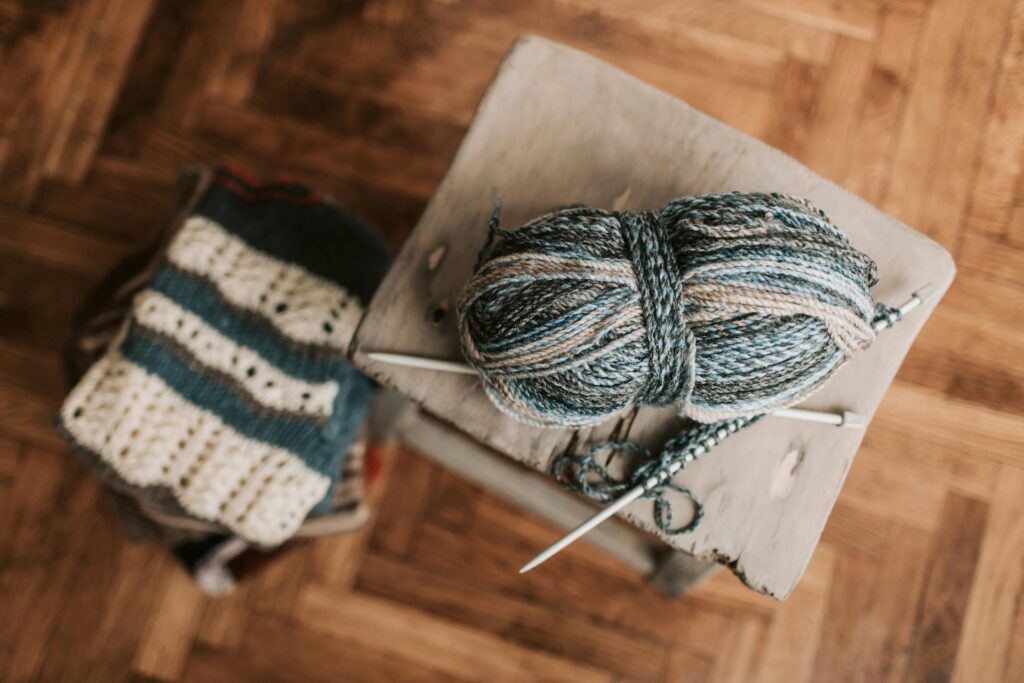
For beginners, look for smooth, plied yarn in a light or medium solid colour. Here’s why: smooth yarn helps you see individual stitches, plies resist splitting, and lighter colours make it easier to spot errors like accidental yarn overs or dropped stitches. If the kit offers a choice, avoid:
- Very dark colours (hard to see stitch definition)
- Fuzzy yarns like mohair (mistakes disappear… and so does your ability to fix them)
- Highly textured novelty yarns (they fight your learning)
Wool or wool blends are often friendly because they have a bit of “grab,” which helps stitches stay put. Cotton can be lovely but less elastic—some beginners find it harder on the hands.
Needle types and sizes that make control easier
Needle material changes the whole feel of knitting. Bamboo or wooden needles have more friction, which can help if your stitches slide off too easily. Metal needles are smooth and fast, which some people love—but they can feel slippery at first.
Also pay attention to needle size. Many beginner projects use slightly thicker yarn and larger needles, because larger stitches are easier to read and manipulate. If a kit starts you on tiny needles for delicate fabric, it may look impressive, but it’s a tougher learning curve than you need.
Look for guidance built into the kit
Instructions, tutorials, and troubleshooting
The biggest difference between a frustrating first experience and a satisfying one is support. A strong kit anticipates the moments you’ll get stuck—because you will, and that’s normal.
Look for patterns that include:
- Clear abbreviations (or, better, minimal abbreviations)
- Step-by-step instructions with photos or diagrams
- Notes on common issues (twisted cast-on edge, uneven tension, accidental increases)
If the kit provides video guidance, even better. Many beginners learn faster by watching how the yarn wraps and how stitches move on the needle. Written instructions are great, but knitting is physical; visual help shortens the “What am I doing wrong?” phase considerably.

Common “starter kit” traps to avoid
A kit can look beginner-friendly and still cause unnecessary pain. A few red flags:
Too many techniques at once. If your first project asks you to learn increases, decreases, colourwork, and seaming in one go, it’s not a beginner project—it’s a stress test.
Mystery yarn with unclear labeling. You should know fibre content and weight (DK, worsted/aran, etc.). Without that, you can’t replace yarn later or learn how yarn categories work.
Patterns that assume prior knowledge. “Cast on and work in pattern” is fine if you already knit. As a beginner, you need “cast on 30 stitches using the long-tail cast-on” (and ideally a link or explanation).
No plan for sizing or fit. For wearable items like hats, the pattern should explain sizing and stretch. Otherwise you’ll finish something beautiful that doesn’t fit any human.
A quick checklist before you buy
If you’re comparing two kits, use this mental checklist and you’ll usually spot the better option quickly:
Does the kit tell you exactly what you’ll make, how long it should take, and what skills you’ll learn? Are the yarn and needles clearly matched to the pattern? Is the yarn beginner-appropriate (smooth, visible stitches)? Are the instructions designed for someone who doesn’t know knitting vocabulary yet? And finally—does the project excite you enough to keep going when your first few rows look a bit wobbly?
That last point is worth underlining. Your first knitted fabric won’t look perfect. It shouldn’t. A good beginner kit is one that makes “imperfect but finished” feel achievable—and makes you curious to cast on again.