The playlist era—and its ceiling
Playlists have never been easier. With a couple of taps you can pull up “Dinner Party Jazz,” “90s Bangers,” or a perfectly serviceable wedding mix built by someone you’ve never met. For low-stakes background music, that convenience is hard to beat.
But when the music is meant to drive the room—fill a dancefloor, smooth awkward gaps, lift a quiet crowd, or keep a multi-generational celebration feeling coherent—playlists hit a ceiling. They’re static. They can’t interpret the mood, react to unexpected moments, or adjust for the simple truth that every audience is different, even when the event brief looks identical on paper.
That’s why live DJ entertainment still wins where it counts: not because a DJ has “better songs,” but because they’re operating the night like a pilot, making constant course corrections. If you’re weighing options for an important event, it can help to browse what reputable operators look like in practice—here’s a straightforward place to find professional DJs for parties and celebrations and compare formats, setups, and experience levels before you decide.
A DJ reads the room in real time
A playlist can’t notice that the dancefloor is filling up with your aunties while your colleagues hover near the bar. A DJ can—and will.
The best DJs treat the crowd like feedback. They watch body language, track which age groups are responding, and pick up on subtle signals: the moment people stop singing along, when the energy is high but getting messy, or when the room needs a reset rather than another peak track.
Micro-decisions that change the night
This “reading the room” isn’t mystical; it’s a series of small, practical decisions that add up:
- Tempo management: nudging BPM up or down to build momentum without exhausting people.
- Genre bridging: moving from, say, disco into modern pop through tracks that share rhythm, key, or vocal style.
- Timing the obvious hits: dropping the anthem when the room is ready, not simply because it’s next in the queue.
- Knowing when to pivot: abandoning a planned run of tracks because the crowd is telling you, clearly, “not this.”
A playlist can’t interpret those signals, and it certainly can’t be brave enough to change the plan.
Flow matters more than song choice
People often over-focus on the track list. In reality, most successful parties use many of the same familiar songs. The difference is flow—how the music moves, how long a vibe is held, and whether the night feels effortless.
Transitions, pacing, and emotional arcs
A strong DJ set is more like storytelling than shuffling. Transitions avoid the dead air that drains energy. Pacing keeps guests engaged across phases: arrivals, dinner, speeches, first dances, late-night peak, and the closing stretch when you want people leaving on a high rather than drifting out one by one.
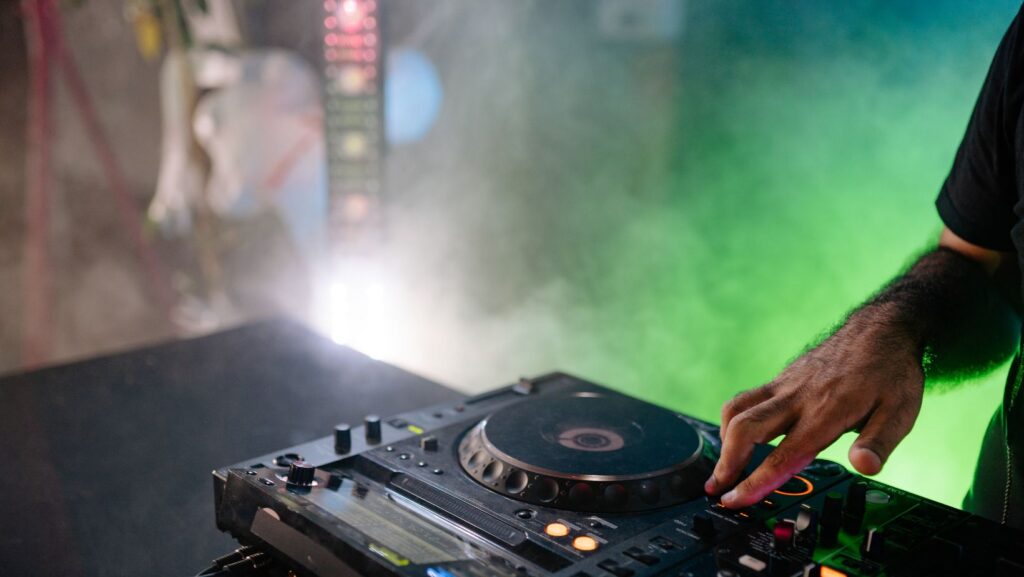
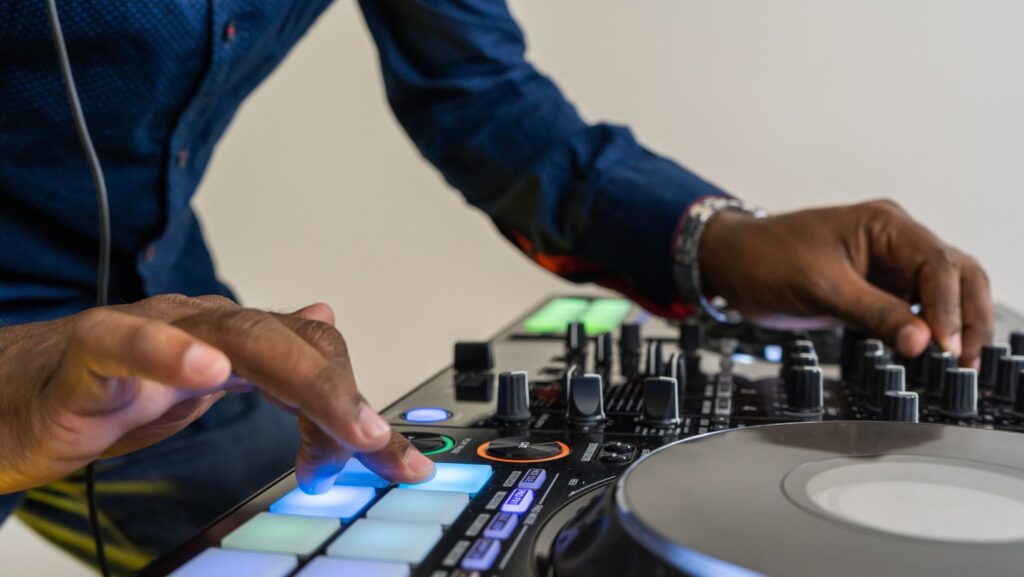
Even small technical choices matter. Clean beatmatching prevents momentum-killing jolts. Thoughtful EQ work keeps vocals clear and avoids that harsh, fatiguing sound you get when tracks clash. And when the crowd is singing? A DJ can loop an intro, extend a chorus, or cut a breakdown at exactly the right moment. Playlists, by design, don’t improvise.
Reliability, sound, and risk management
A laptop and a speaker can work—until they don’t. Events are full of variables: Wi‑Fi drops, an update notification pops up at the worst time, a phone overheats, a cable crackles, the battery dies, or the venue’s power layout turns out to be “quirky.”
Professional DJs build redundancy into their setups and plan around venue constraints. That includes appropriate sound coverage for the room, safe cable runs, backup audio sources, and the boring-but-critical discipline of soundchecking before guests arrive.
When tech fails, humans adapt
Even with good gear, problems can happen. The point is that a DJ can recover without the whole room noticing. If a microphone starts feeding back during speeches, a DJ fixes gain and positioning quickly.
If the dancefloor empties because the last song landed flat, they can pull it back with a smarter follow-up. A playlist can’t troubleshoot the moment; it can only continue playing.
Making it personal without making it chaotic
The most common argument for playlists is personalization: “We can pick every song ourselves.” That’s fair—curation matters. But total control can backfire if it creates a set full of sharp turns, duplicate tempos, or nostalgia tracks that don’t actually function as dance records.
A good DJ translates your taste into something that works in the room. They’ll take your must-plays and shape the context around them. They’ll also help with the underrated part of personalization: boundaries. Not every request is right for every moment, and not every guest understands the difference.
Requests, dedications, and boundaries
Handled well, requests become rocket fuel. Handled poorly, they derail the floor. DJs who do this week in, week out know how to:
- accept requests without promising they’ll be played immediately,
- place them where they fit the energy curve,
- politely decline tracks that clash with your brief (or the vibe), and
- keep the night feeling “you” rather than like an open-jukebox free-for-all.
That balance is hard to automate.
How to choose the right DJ (and when a playlist is fine)
There are times a playlist is the sensible option: a casual house gathering, a small dinner, or any event where music is truly background. If nobody is expecting a dancefloor, you don’t need a dancefloor operator.
But if the music is a main feature, choose a DJ the way you’d choose a photographer: by competence, style, and proof of experience. Ask how they handle requests, what their backup plan is, and how they structure the night across different moments. Listen to short mixes if available—not to judge taste, but to hear pacing and transitions. And confirm practicalities: arrival time, sound limits, mic needs, and whether they’ve worked similar rooms.
Playlists are great libraries. DJs are great editors, technicians, and crowd psychologists—live. When the goal is a night people talk about afterwards, that human layer is still the difference-maker.