
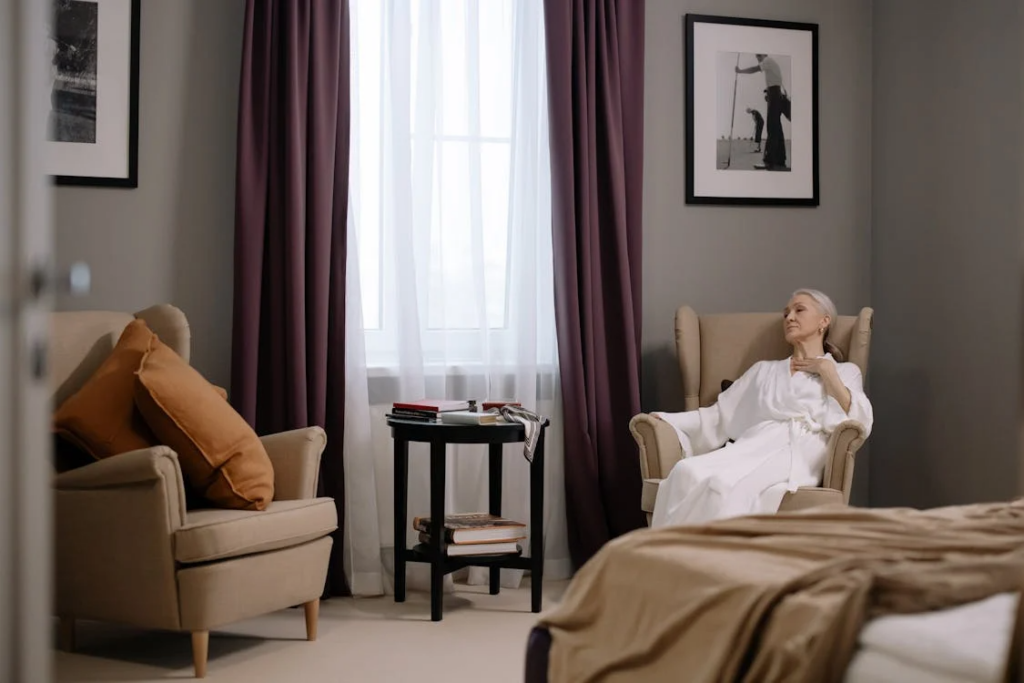
Ageing doesn’t have to mean a loss of comfort. In fact, it should be the opposite. As bodies change and mobility shifts, the furniture inside your home becomes more important than ever before. The right seating can make your everyday life so much better…
But the wrong seating can make everything a struggle.
Here’s what you need to know.
- Why Chair Selection Matters More Than Ever
- The Hidden Dangers Of Poor Seating
- Key Features That Make Chairs Senior-Friendly
- How To Choose The Right Chair For Your Needs
Why Chair Selection Matters More Than Ever
Did you know that over 14 million older adults report falling every year?
In the USA, that’s 1 in 4 adults aged 65 or older falling every year. It’s a staggering statistic from the CDC.
And a lot of these falls occur in the home. Think about it for a minute. Every time an older adult stands up from a chair, they’re putting themselves at risk of a fall.
The simple act of standing up or sitting down becomes a problem. It should be as easy as sitting back in a comfy chair, right?
Think about seniors who struggle with their strength or balance. For them, getting out of a chair is an ordeal. Trying to shift from a seated position can feel like an exercise in sheer willpower.
That’s where comfortable chairs for the elderly come in.
Investing in the right chairs and seating can make all the difference. Not only that, but designing comfort into every area of your home is incredibly important for creating a safe and accessible environment.
Let’s look at the stats, then break it all down.
Seniors spend an average of 5 to 9 hours per day sitting. Spending so much time sitting down really isn’t healthy for your body.
So if that’s the case, why do we spend so much time in chairs?
Comfort.
Most of us will do almost anything to make our lives more comfortable.
It’s not laziness. It’s human nature. We like to make life easier when we can. When it comes to elderly care, that’s especially important.
Standing up and sitting down shouldn’t be a chore. It should be a simple movement.
If you have older adults in your family, what are you doing to make sure you have the right furniture in your home?
The Hidden Dangers Of Poor Seating
Lots of people don’t realise just how much damage a bad chair can cause.
Poor seating can do all of these things to your body:
- Increases pressure on joints and spine
- Decreases circulation in legs and feet
- Makes it harder to stand up without assistance
- Increases risk of falls during transitions
- Leads to chronic pain that gets worse over time
This may not seem like a big deal, but falls are a leading cause of injury for adults over 65.
There are about 3 million visits to emergency departments each year as a result of older adult falls.
Some of these falls result in broken bones, loss of mobility, and even death.
As we get older, falls become a real concern. The risk just increases over time. This makes having the right supportive seating even more important.
Key Features That Make Chairs Senior-Friendly
Now you might be thinking, but what is a senior-friendly chair?
A senior-friendly chair has these features:
Seat height adjustability
Seat height adjustability is the most important feature for all elderly people.
The perfect seat height is one that allows your feet to rest flat on the floor with your knees at a 90-degree angle.
Too low and it will be hard to stand. Too high and circulation to the legs will be cut off.
Adjustable seating solves this problem entirely.
Armrest support
Sturdy, well-positioned armrests provide leverage when getting up from a sitting position.
Simple push-up functions can dramatically reduce risk of falls.
Proper lumbar support
Lower back pain is a problem that affects millions of seniors.
Built-in lumbar support maintains the natural curve of your spine and prevents the slumping posture that leads to chronic discomfort.
Easy-clean materials
Spills, medical events, and other messes happen all the time. Furniture that wipes clean without absorbing odours or stains keeps your home hygienic and stress-free.
Riser functions
Riser recliners tilt forward, helping users stand with little to no effort. This technology can be life-changing for those with significant mobility challenges.
How To Choose The Right Chair For Your Needs

Shopping for chairs and seating might feel like a daunting task at first. But it doesn’t have to be that way.
Ask yourself these questions before buying a new piece of furniture:
- What’s the primary use? Reading? Watching television? Napping?
- Do you need assistance standing?
- Do you have any specific medical conditions?
- What’s the room layout, and how much space do you have?
Start with these questions, then work from there. They will guide the rest of your shopping process.
Test before buying
Sit in a chair for at least 15 minutes before buying. Get up and down multiple times. Do the armrests feel in the right place to help you push yourself up?
Measure the space
If the chair is the wrong size for the room, it doesn’t matter how good it looks. Measure doorways, hallways, and the intended spot before making any purchase.
Prioritise quality over price
Cheap chairs wear out fast. They’re also often flimsy and not structurally sound. This is one area where quality matters.
Think long-term
Needs change. Selecting models with adjustable features will provide more flexibility as needs and circumstances change.
The Bigger Picture Of Home Comfort
Chairs are one part of the puzzle.
Designing comfort into everyday life for seniors means looking at the home as a whole.
Movements and routines are affected by every single item of furniture, every room layout, every small detail in your home.
Designing comfort into your living space is more than just a checklist of features to consider.
But seating is the key.
We sit to eat breakfast, sit to watch our favourite programmes. We sit to read, to talk to family, to rest tired legs after a walk. Chairs are a constant in our everyday lives.
And when that constant companion supports us rather than strains us, everything gets better. We sleep better because our bodies aren’t fighting discomfort all day. Our moods improve because we’re not in constant pain. We maintain our independence because transitions are easier.
The real benefit of thoughtful design and creating comfort at home.
Bringing It All Together
Designing comfort into everyday life for seniors starts with understanding what matters.
Comfort for older adults is not a luxury. It is a necessity. Comfortable, supportive chairs provide independence, reduce risk of injury, and improve the quality of everyday life.
Remember these points when shopping for the right furniture for your loved ones:
- Proper seat height — For safe standing without assistance.
- Sturdy armrests — Built for support.
- Lumbar support — Don’t forget the importance of spinal health.
- Quality materials — Built to last, not fall apart in a few months.
- Features that match specific needs — Adjustability, functions, and more.
The art of slowing down doesn’t have to mean less. It means being more intelligent and aware about choices that shape your everyday life.
Few choices matter more than the places where we sit.
Make sure you’re getting them right. Our bodies deserve the respect.