Most parents know the drill. Your kid wants a snack, you hand them something, and they inhale it while staring at a screen or running to the next activity. Gone in thirty seconds. No awareness, no enjoyment, just fuel.
But here’s the thing: snack time can actually be one of the best opportunities to practice mindfulness with children. You don’t need an elaborate setup or a meditation cushion. A simple healthy pudding or a handful of berries works just fine. What matters is how you approach it. Kids who learn to slow down and pay attention to what they’re eating tend to develop better relationships with food over time, and they pick up on fullness cues more easily.
Why Snacks Make Better Mindfulness Practice Than Meals
Meals come with expectations. There’s pressure to finish, conversations about vegetables, and negotiations about dessert. Snacks are lower stakes. A mid-afternoon bite doesn’t carry the same weight as dinner, which makes it perfect for introducing mindfulness concepts without turning the whole thing into a lesson.
The American Academy of Pediatrics recommends that toddlers and young children eat two to three healthy snacks daily to meet their nutritional needs. That’s two to three built-in opportunities every day to practice being present. Pretty convenient when you think about it.
Making It Work (Without Making It Weird)
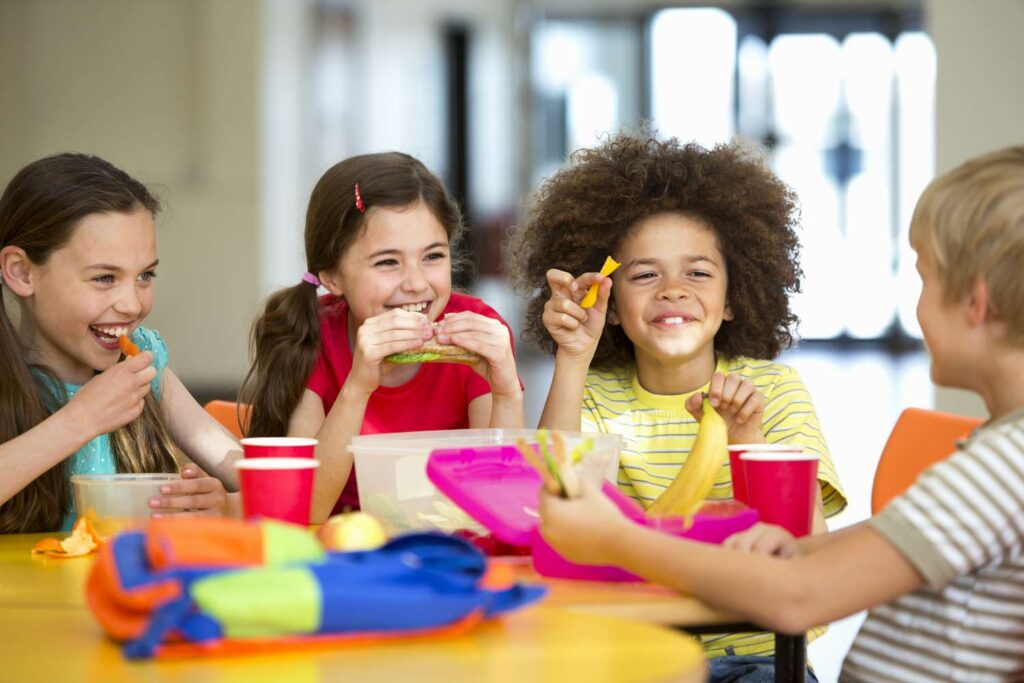
Kids don’t respond well to “now we’re going to eat mindfully” announcements. They respond to curiosity. Ask them what their snack smells like before they take a bite. Have them describe the texture. Is it crunchy? Smooth? Does the taste change as they chew?
You’re not trying to turn every apple slice into a spiritual experience. But getting them to slow down for even a few seconds makes a difference. Pilot studies on mindful eating programs in schools suggest that children who practice these techniques often report better awareness of when they’re actually hungry versus just bored.
Another approach: put the phones away. Yours too. Sit down with them, even if it’s just for five minutes. Snack time becomes connection time, and that’s where the real mindfulness happens.

The Ripple Effect on Eating Habits
Children who eat mindfully tend to make better food choices down the line. They’re not perfect, obviously. Kids are still going to want cookies. But according to Action for Healthy Kids, creating a deeper connection with food during childhood supports the development of habits that stick.
And the benefits extend beyond nutrition. Mindful eating teaches kids that they can pause, check in with themselves, and respond thoughtfully. That’s a skill that transfers to homework, friendships, and pretty much everything else.
Start Small
You don’t need to overhaul your entire routine. Pick one snack this week and try it differently. Turn off distractions, sit together, and pay attention. Notice what happens. Maybe nothing dramatic. Maybe something shifts.
The HealthyChildren.org resource from the American Academy of Pediatrics has solid guidance on choosing nutritious options that support these moments, emphasizing whole foods over processed alternatives.
Snack time doesn’t have to be an afterthought. It can be a pause, a reset, a small moment of presence in an otherwise chaotic day. And honestly, couldn’t we all use more of those?