

Freelancing as a 3D artist has a strange paradox built into it. You choose independence so you can control your time, yet somehow your computer ends up controlling you. Especially if Blender is your main tool.
You know the routine. Client feedback arrives late afternoon. A few tweaks turn into a full re-render. You hit “Render,” glance at the estimated time, and realize your machine is about to be unusable for the next six hours. Dinner gets postponed. The evening disappears. Again.
This isn’t a motivation problem. It’s a workflow problem.
The Real Cost of Local Rendering
Rendering locally has a hidden tax that most freelancers underestimate. It’s not just electricity or hardware wear. It’s attention, energy, and time fragmentation.
When your workstation is locked at 100% CPU or GPU, you can’t really work. You can’t comfortably open heavy files, test variations, or prep the next project. Multitasking becomes risky. So you wait. Or you stay up.
Over time, this creates a pattern: nights become render windows, days become recovery periods, and your supposed flexibility quietly erodes. Many freelancers accept this as “just how it is.” It isn’t.
Why Nights Became the Default (and Why They Shouldn’t)
Freelancers often render at night for two reasons. First, they need the computer free during the day. Second, deadlines don’t care about human circadian rhythms.
The result is predictable. Sleep gets shorter. Focus drops. Small mistakes creep in. Creativity suffers first, productivity second, and health last — but inevitably.
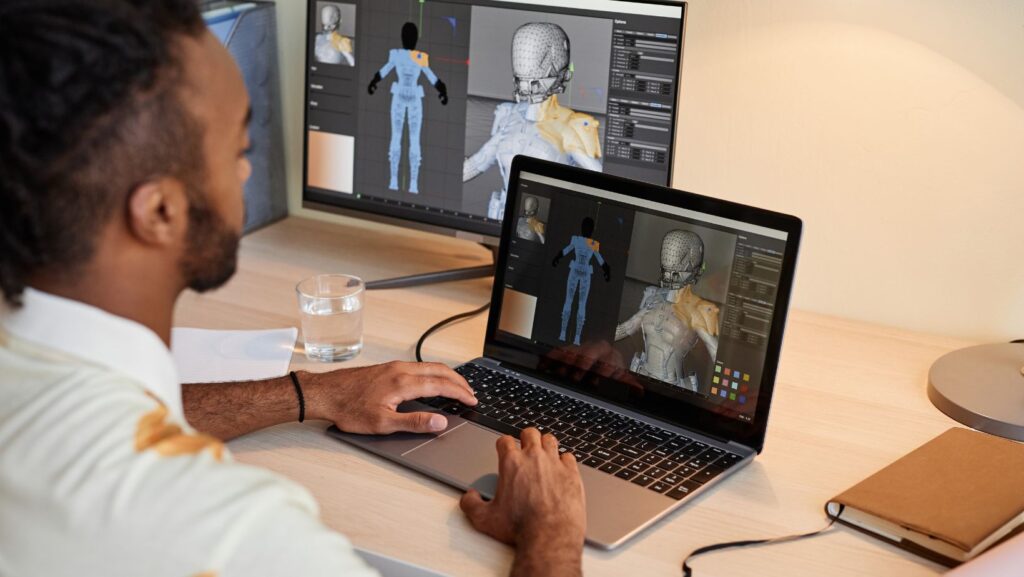
What’s ironic is that many freelancers already think like business owners when it comes to clients and pricing, yet still treat rendering as a personal endurance test instead of a solvable operational bottleneck.
Offloading Work Is Not Cheating
In other freelance fields, outsourcing is normal. Accountants use automated systems. Designers send print jobs to external presses. Video editors rely on proxy workflows.
For 3D artists, rendering is no different. It’s a compute task, not a creative one. Once decisions are made, the rest is brute force.
That’s where a Blender Render Farm changes the equation. Instead of tying your personal machine to a single task for hours, you send the job out, close your laptop, and get your evening back.
If you want a concrete example, services like GarageFarm.NET allow Blender users to upload scenes and render them on dedicated infrastructure built specifically for this kind of load. You’re not buying more power — you’re renting time.
Productivity Is Not About Working More Hours
Freelancers often fall into the trap of measuring productivity by effort instead of output. Late nights feel productive, but they’re usually a sign that the system is inefficient.
When rendering moves to the cloud, a few things happen immediately:
- Your local machine stays usable.
- Renders finish faster because they run in parallel.
- You stop planning your life around progress bars.
This creates a subtle but important shift. You start batching work properly. You send renders, then move on — or stop working altogether. That mental separation matters more than people expect.
The Psychological Benefit No One Talks About
There’s also a mental cost to watching renders crawl forward at 2 a.m. It keeps your brain in a half-working state. You’re not resting, but you’re not fully working either. Over time, that drains motivation.
When you offload renders, the project has a clear endpoint. You upload, you confirm settings, and you’re done for the day. The computer works. You don’t.
This boundary is essential for long-term freelancing. Burnout rarely comes from one big workload spike. It comes from hundreds of evenings that were supposed to be yours and weren’t.
Work-Life Balance Is a Competitive Advantage
Clients don’t pay you for suffering. They pay you for results, consistency, and reliability.
Freelancers who protect their energy deliver better work over time. They respond faster. They make fewer mistakes. They’re easier to work with. Ironically, stepping away from the machine often improves professional performance.
Using a Blender Render Farm is not about being lazy or extravagant. It’s about treating your time as a finite resource instead of an infinite buffer.
A More Sustainable Freelance Setup
You don’t need to render everything in the cloud. Many artists keep look-dev and test renders local, then offload finals. That alone can reclaim dozens of hours per month.
Think of it this way: if rendering costs you two evenings per week, that’s over 100 evenings per year. That’s not a technical issue. That’s a life design issue.
Tools exist to fix it. The question is whether you see rendering as a badge of endurance or a task that should disappear quietly into the background.
Your evenings were never meant to belong to a progress bar.