
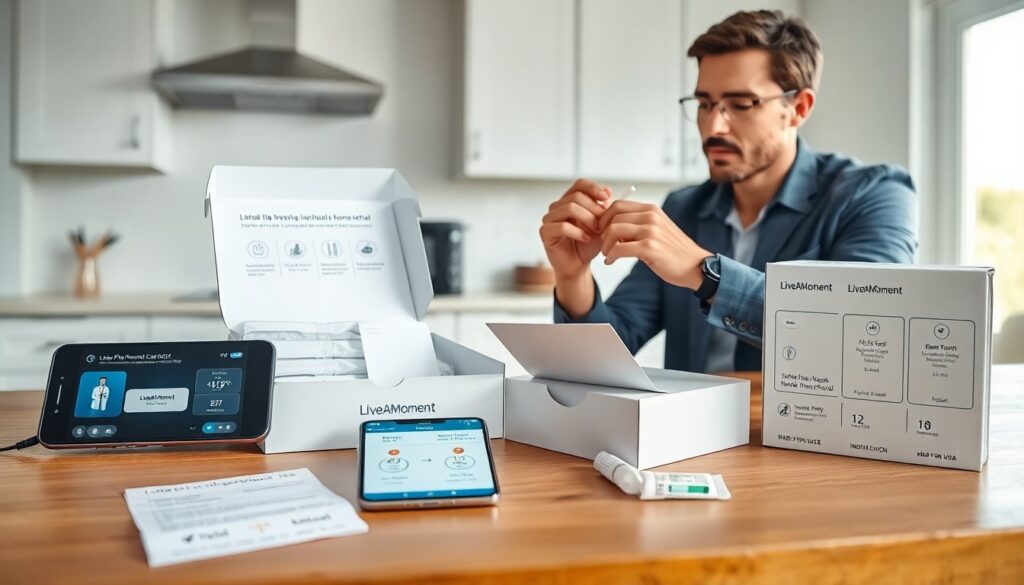
Accurate home testing option liveamoment appears as a common search for people who want fast results at home. The company sells at-home tests for common infectious diseases and health markers. This article explains how LiveAMoment tests work and how accurate they prove in 2026. It focuses on data, study results, and real-world factors that affect results.
Key Takeaways
- LiveAMoment provides accurate home testing options combining rapid antigen and molecular at-home PCR kits for common infectious diseases.
- The company reports sensitivity and specificity metrics validated by independent studies, showing over 98% specificity for most products.
- User technique, test timing, and sample quality significantly impact the accuracy of LiveAMoment home tests.
- LiveAMoment supplies detailed instructions and telehealth support to help users collect proper samples and interpret results correctly.
- Choosing LiveAMoment tests offers a balance of fast results and lab-based reliability, with turnaround times from 15 minutes to 72 hours.
- Consumers should consider regulatory status, cost, and when to seek clinical care alongside using LiveAMoment’s accurate home testing option.
How LiveAMoment Tests Work
LiveAMoment offers lateral-flow and molecular kits. The company ships a test kit and instructions to users. The user collects a sample, follows the steps, and sends a sample when required. The lab processes molecular samples and returns results by secure portal. The lateral-flow tests display a visible line for a positive result. LiveAMoment pairs rapid tests with telehealth consults for unclear results. The company lists limits of detection and intended use on its instructions. Users must register the kit and follow timing instructions. LiveAMoment tracks batch data and updates protocols when studies show a need.
Accuracy Metrics: Sensitivity, Specificity, And Real-World Performance
LiveAMoment reports sensitivity and specificity for each product. Sensitivity measures how often the test flags a true positive. Specificity measures how often the test flags a true negative. The company publishes these metrics for rapid antigen and at-home PCR options. Real-world performance can differ from lab numbers. Patient symptoms, viral load, and test timing change sensitivity. LiveAMoment updates performance claims after post-market data collection. Regulatory submissions show pooled estimates that mirror peer products. The company recommends confirmatory testing when disease prevalence or clinical risk is high. Users should read positive and negative predictive value for context.
Clinical Validation And Third-Party Studies
Independent labs tested LiveAMoment products in 2024–2026. Those studies compared LiveAMoment results to laboratory PCR. The third-party work found similar sensitivity to competitor rapid tests when users sampled correctly. A few studies found lower sensitivity for asymptomatic cases. LiveAMoment then adjusted instructions and improved swab design. Peer-reviewed papers reported specificity above 98% for most products. The company shared raw performance data on request. Clinicians read the validation details before recommending a home test. Independent review increases confidence in reported accuracy.
Factors That Affect Home Test Accuracy
Several factors change LiveAMoment test accuracy. The user technique affects sample amount and result clarity. The timing of the test relative to symptom onset changes viral load and detection. Storage and transport conditions affect molecular tests. Manufacturing variability can change lot performance. The test target matters: some markers appear at low concentrations early in infection. The company lists handling and timing rules to reduce errors. Health providers advise repeat testing when initial results contradict symptoms. LiveAMoment monitors returns and invalid rates to spot quality issues.
User Technique, Timing, And Sample Quality
Users often fail to swab deeply enough. Users sometimes read results outside the allowed time window. Both actions lower sensitivity. LiveAMoment provides illustrated guides and short videos for users. The company warns against eating, drinking, or brushing teeth before oral sampling. The lab rejects visibly contaminated samples to protect result integrity. The user must follow storage temperature ranges on the label. Clinicians tell patients that a properly collected sample gives a higher chance of correct results. Repeat testing increases overall detection when users suspect an initial false negative.
Choosing The Right Home Test: Alternatives And When To See A Clinician
Patients should compare LiveAMoment to other at-home options. Some companies sell home PCR with courier pickup. Others sell rapid antigen tests with no lab component. Clinicians weigh sensitivity, cost, and turnaround time when they advise patients. LiveAMoment suits users who want a mix of rapid and lab-based options. A clinician visit fits when symptoms are severe or when treatment depends on an exact diagnosis. Patients should seek care if they have worsening breathing, high fever, or prolonged symptoms. Health providers use home-test results as one piece of clinical information.
Regulatory Status, Cost, And Turnaround Time
LiveAMoment lists FDA or local regulatory status for each kit. The company follows emergency use or full approval pathways where required. Pricing varies by test type and by bundled services. Rapid antigen kits cost less than molecular lab tests. Molecular at-home kits include courier and lab fees. Turnaround time ranges from 15 minutes for antigen to 24–72 hours for lab PCR. Insurance sometimes covers clinically ordered tests. Consumers should confirm coverage and wait times before purchase.

Jynthorath Vorkal
A passionate voice in personal finance and technological innovation, Jynthorath Vorkal specializes in the intersection of traditional wealth-building and emerging digital economies. Their analytical approach breaks down complex financial concepts into actionable insights, with particular expertise in cryptocurrency markets and automated investing systems.
Writing with clarity and foresight, Jynthorath explores how technological advances reshape wealth creation opportunities. Their articles combine data-driven analysis with practical applications, helping readers navigate the evolving financial landscape.
Beyond writing, Jynthorath maintains a deep interest in algorithmic trading patterns and sustainable investing practices. Their perspective bridges the gap between conventional financial wisdom and next-generation wealth-building strategies.
At WealthVistaOnline.com, Jynthorath focuses on demystifying complex financial technologies and identifying emerging trends that impact personal wealth management.