
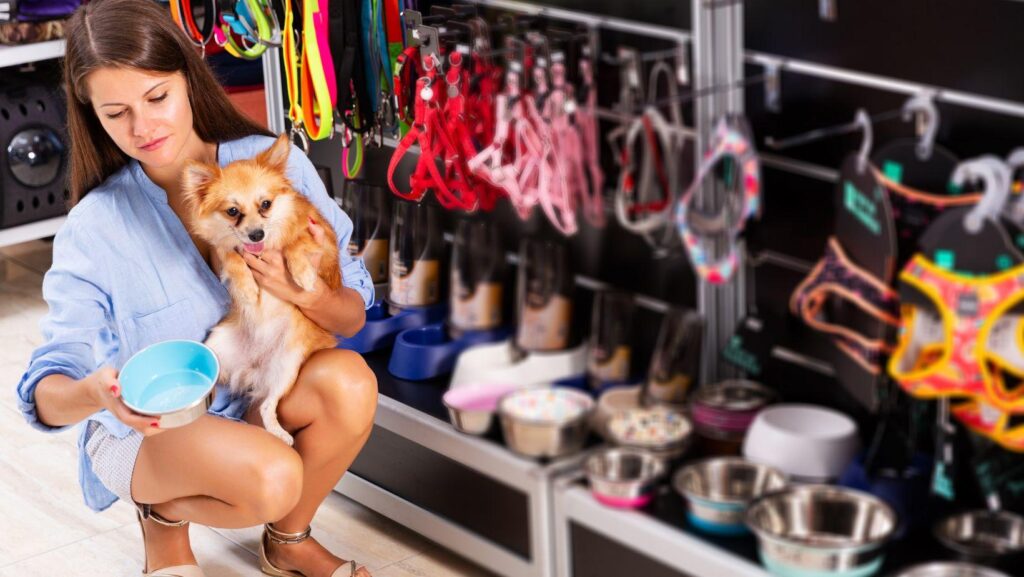
Households that share space with animals accumulate food containers, bowls, grooming tools, bedding and cleaning supplies over time. The volume of these items becomes difficult to manage in a residence with limited storage, particularly when several animals share the same space. A considered arrangement allows occupants to keep supplies accessible, protect food quality and maintain a room that still functions for daily use. By treating pet supplies as a permanent part of the household layout, residents can reduce clutter without compromising animal care.
Assessing Household Storage Needs
The first consideration is an inventory of everything an animal requires each week. Residents are encouraged to note how much food is consumed, how often bedding is washed as well as which grooming items are used regularly. The assessment of these quantities gives occupants a realistic sense of the space required rather than an estimate based on habit.
Storage is more effective when it is positioned near the place where an item is actually used. Food belongs close to the feeding area, while grooming supplies sit best near the space where washing occurs – this approach reduces the number of trips occupants make during routine care. Additionally, a small residence offers few available locations, so occupants may need to combine categories within a single cupboard.
Creating A Feeding Station
A designated feeding area keeps bowls, mats and food containers in one predictable location. Animals generally settle into a routine when meals arrive in the same spot each day, and occupants benefit from a surface that can be wiped down quickly. A corner of a kitchen or a utility room is usually sufficient, provided the area sits away from foot traffic.
Moreover, the placement of the station should account for the type of food a household purchases. Owners comparing dry formulas, wet options or fresh preparations often review general guidance such as best dog food before committing to a container size, since bulk purchases require more shelf space than smaller bags. Advice on portioning and dietary requirements can be obtained from a veterinarian or reliable resources.
Storing Food And Supplies Safely
Pet food degrades when it is exposed to heat, moisture or air for extended periods. Sealed containers are a practical option for maintaining freshness in a residence where the pantry sits close to an oven or a radiator. Occupants are encouraged to keep the original packaging inside the container, because feeding guidance appears on the bag rather than the bin.
At the same time, storage choices must consider the animals themselves. A determined dog is capable of opening a low cupboard, and cats generally reach surfaces that occupants assume are inaccessible – these details matter when deciding which shelf holds food and which holds cleaning products. Household chemicals belong in a separate location, ideally behind a latch.
Maintaining The Arrangement Over Time
An organizing system is only useful while it continues to reflect the household routine. Feeding schedules, grooming requirements, bedding plus storage demands change as an animal ages. Occupants who review the arrangement periodically can remove unused items and adjust shelving before the space becomes crowded – this habit keeps a residence from accumulating supplies that serve no purpose.
Furthermore, a change in diet often has an immediate effect on storage. Households comparing best cat food options may discover that a new bag no longer fits an existing container – those who select orijen cat food can measure the packaging before adjusting the shelf that holds it. The evaluation of packaging dimensions is a minor step that keeps a stable arrangement intact.
Conclusion
Organizing pet supplies in a small residence is an exercise in matching available space to the routine an animal requires. Storage needs, feeding stations, safe food handling but also ongoing maintenance each contribute to an arrangement that remains workable. By treating animal care as part of the household layout, residents can maintain a tidy space without reducing the quality of that care.

Jynthorath Vorkal
A passionate voice in personal finance and technological innovation, Jynthorath Vorkal specializes in the intersection of traditional wealth-building and emerging digital economies. Their analytical approach breaks down complex financial concepts into actionable insights, with particular expertise in cryptocurrency markets and automated investing systems.
Writing with clarity and foresight, Jynthorath explores how technological advances reshape wealth creation opportunities. Their articles combine data-driven analysis with practical applications, helping readers navigate the evolving financial landscape.
Beyond writing, Jynthorath maintains a deep interest in algorithmic trading patterns and sustainable investing practices. Their perspective bridges the gap between conventional financial wisdom and next-generation wealth-building strategies.
At WealthVistaOnline.com, Jynthorath focuses on demystifying complex financial technologies and identifying emerging trends that impact personal wealth management.