
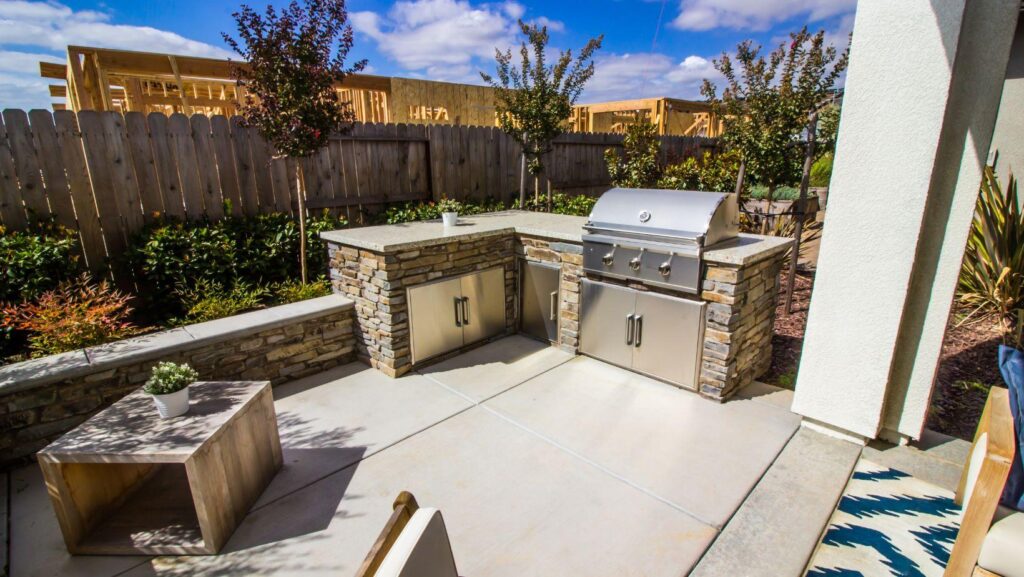
Outdoor cooking is a regular part of residential life, and property owners often set aside a portion of the yard for preparing meals. Arranging that area is more demanding than it appears, because equipment, seating, storage and safety clearances compete for a limited footprint. A considered layout allows occupants to move comfortably around hot surfaces while keeping supplies within easy reach. By treating the cooking area as a permanent element of the property rather than a temporary arrangement, homeowners can create a space that remains practical across many seasons.
Assess The Available Space
The dimensions and shape of the yard determine how much of it can reasonably be devoted to cooking. Property owners are encouraged to observe how occupants move through the space, since paths between the residence, seating and the garden establish themselves before construction begins. The assessment of the ground surface matters as well, because level footing is safer for heated equipment.
Additionally, the distance between the cooking area and the residence affects daily use. A position near the kitchen shortens the trip for plates and ingredients, while a greater distance keeps smoke away from windows – this balance is worth resolving before permanent surfaces are installed. Overhead structures and mature plantings also limit where heat producing equipment can sit safely.
Select Suitable Cooking Equipment
The choice of appliance shapes most of the remaining decisions in the layout. Households that cook for large groups typically require more surface area than those preparing occasional meals. Outdoor appliances fall into several broad categories, and the bbq grills sold for residential use differ considerably in size, fuel type but also the amount of clearance they require.
Moreover, the placement of the equipment is as important as the selection itself. A movable unit is an option for yards that serve several purposes, while a fixed island suits sites where cooking occurs frequently. Occupants benefit from a clear working surface on either side of the appliance – this approach reduces the need to carry hot items far.
Manage Smoke And Ventilation
Ventilation is more effective when the cooking area remains open to the air rather than enclosed beneath a solid roof. Smoke, heat as well as cooking odours accumulate quickly in a confined space and become uncomfortable for occupants. Occupants can position the appliance so that the movement of air carries smoke away from seating – this practice improves comfort during gatherings.
At the same time, permanent installations introduce requirements that extend beyond comfort. Enclosed structures, fuel connections and fixed ventilation are subject to local rules, and professionals who understand local building codes should carry out that work. Distance is a factor as well, since equipment placed close to walls, fences or overhanging branches presents a greater risk of heat damage.
Organize Fuel And Storage
Fuel and accessories require a dedicated place, and the storage of these items determines how convenient the area feels over time. Households comparing charcoal grills can plan for a dry, ventilated spot to keep fuel and dispose of ash safely – those who install gas grills can allocate space for cylinders or a permanent supply line instead. Both arrangements are easier to maintain when storage sits near the working surface.
Furthermore, utensils, covers plus cleaning supplies benefit from an enclosed cabinet or a weather resistant container. Equipment left exposed to rain and sun typically deteriorates faster, which shortens its useful life. A habit of returning tools to the same place after each use helps occupants keep the area orderly.
Conclusion
Planning an outdoor cooking area is a task that rewards attention before equipment arrives. The available space, the selection of appliances, smoke and ventilation as well as fuel and storage each influence how the finished area performs. Property owners who consider these matters together generally end up with an area that supports cooking without sacrificing appearance. By treating the cooking zone as part of the wider landscape rather than an isolated fixture, homeowners can maintain a space that remains useful across many seasons.

Jynthorath Vorkal
A passionate voice in personal finance and technological innovation, Jynthorath Vorkal specializes in the intersection of traditional wealth-building and emerging digital economies. Their analytical approach breaks down complex financial concepts into actionable insights, with particular expertise in cryptocurrency markets and automated investing systems.
Writing with clarity and foresight, Jynthorath explores how technological advances reshape wealth creation opportunities. Their articles combine data-driven analysis with practical applications, helping readers navigate the evolving financial landscape.
Beyond writing, Jynthorath maintains a deep interest in algorithmic trading patterns and sustainable investing practices. Their perspective bridges the gap between conventional financial wisdom and next-generation wealth-building strategies.
At WealthVistaOnline.com, Jynthorath focuses on demystifying complex financial technologies and identifying emerging trends that impact personal wealth management.