
Picture a Saturday morning in a mountain community: the sun is brilliant, the scenery is breathtaking, and a thunderstorm is already quietly building on the afternoon horizon. For parents raising children at elevation, this scene is all too familiar — and it captures a paradox that’s genuinely unique to high-altitude living. Despite the spectacular natural surroundings, many families are discovering that indoor play environments aren’t compromises at all. They’re indispensable alternatives to outdoor activity, valuable in their own right.
The Unique Challenges of High-Altitude Living
Life above 5,000 feet comes with physical realities that directly shape how children move, play, and recover. Thinner air means less available oxygen, which can noticeably reduce endurance — especially in younger children whose cardiovascular systems are still maturing. Layer on extended winters, unpredictable weather swings, and seasonally intense UV exposure, and a clear picture emerges: outdoor play windows in mountain communities tend to be narrower and far less reliable than what families at lower elevations typically experience.
Air quality adds yet another wrinkle. During wildfire season, particulate levels can spike with little warning, making prolonged outdoor exertion genuinely inadvisable for sensitive kids. And yet consistent physical activity remains essential for healthy cognitive development, motor skill refinement, and emotional regulation — regardless of what’s happening outside. That tension is exactly why families need dependable alternatives when outdoor conditions turn unfavorable.
The Rise of Indoor Play Spaces in Mountain Communities
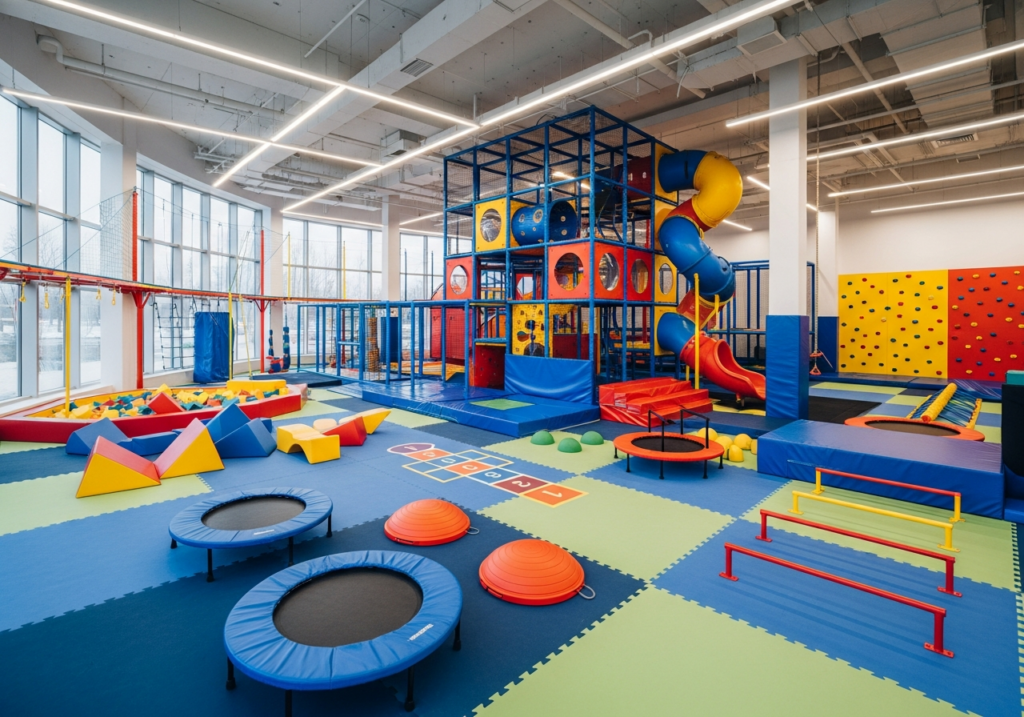
Across mountain regions, indoor facilities have grown up directly in response to these gaps. Today’s venues offer far more than a rainy-day fallback. Climbing walls, obstacle courses, soft play zones, and age-graduated equipment support children from toddlerhood through early adolescence, all under one roof. Most importantly, these spaces provide year-round, weather-independent access to structured physical activity — giving parents the ability to build and maintain consistent routines rather than watching them unravel with every change in season.
That consistency matters more than many families initially realize. When exercise schedules become erratic, physical fitness can slip — and with it, confidence and mood regulation. A reliable indoor destination gives families a steady anchor point no matter what the calendar or the forecast brings.
Social and Developmental Benefits
The benefits reach well beyond physical fitness. Indoor play environments offer genuinely rich social opportunities, where children practice communication, negotiation, and teamwork through the kind of unscripted interaction that develops those skills most naturally. For shy or anxious kids, the structured, supervised atmosphere of an indoor venue can actually lower social barriers that wide-open outdoor spaces sometimes make worse.
From a developmental standpoint, well-designed equipment targets specific capabilities in meaningful ways. Balance beams build proprioception. Climbing structures develop upper-body strength and spatial reasoning. Padded obstacle courses sharpen coordination and teach children to assess risk in real time. Mastering a new physical challenge in a safe environment quietly builds the kind of confidence that tends to spill over into other areas of a child’s life.
Practical Advantages for Busy Families
Indoor venues also eliminate one of the most persistent frustrations of family planning: the weather-related cancellation. Parents can book playdates with genuine confidence, knowing a sudden hailstorm won’t derail the afternoon. Climate-controlled spaces, padded surfaces, and trained staff on-site address the safety concerns parents naturally carry — providing real peace of mind without requiring constant vigilance.
Finding Quality Indoor Play Options in Your Area
When evaluating an indoor facility, it’s worth looking closely at cleanliness standards, visible staff certifications, clear separation of age-appropriate equipment, and transparent maintenance practices. Rotating between different venues periodically helps keep things fresh and children genuinely engaged.
Parents in Colorado Springs, for instance, have found that facilities like indoor playground colorado springs offer comprehensive play environments designed for a range of age groups and activity preferences — a practical example of how regional options are rising to meet this real community need.
Balancing Indoor and Outdoor Play
Medical and developmental professionals consistently recommend that children get both structured and unstructured movement, and the two environments genuinely complement each other. Indoor activity doesn’t replace outdoor exploration — on days when mountain weather cooperates, time outside delivers sensory experiences and nature exposure that no facility can replicate. The healthiest approach treats both settings as part of a complete, flexible activity toolkit rather than placing one above the other.
A Broader Perspective
Indoor play spaces have become genuine community resources for high-altitude families — thoughtful, practical responses to real geographic and environmental challenges. The growing enthusiasm for these venues doesn’t reflect a retreat from nature. It reflects a parent’s clear-eyed commitment to keeping their children moving, socially engaged, and thriving across every season. Families who take the time to explore what their local communities offer often find that these spaces stop being backup plans entirely — and become some of their kids’ favorite destinations.